For three years, the argument about AI mostly happened in comment sections, op-eds, and congressional hearings that went nowhere. This week the AI backlash moved into courtrooms, IT departments, and school districts — places where decisions actually get enforced.
In a single news cycle on Friday, October 23, Texas’s lawsuit against OpenAI and Sam Altman made headlines, Sweden’s government was reported to be blocking ChatGPT and Claude on its work computers, and New York City’s rollback of generative-AI features in more than 38 classroom products came under fresh scrutiny. Different places, different tools, different arguments. Same direction.
Here’s what each one actually says, what’s still murky, and why the pattern matters more than any single headline.

The 30-Second Version
- Texas: Attorney General Ken Paxton sued OpenAI and Altman in Collin County district court, alleging ChatGPT harmed Texans, especially minors, and asking a court to force OpenAI to block minors and get third-party approval before releasing new models
- Sweden: The Government Offices will block ChatGPT and Claude on staff computers starting Monday, October 26, pointing civil servants to Microsoft Copilot instead
- New York City: The Education Department is disabling or discontinuing the AI components of more than 38 previously allowed student-facing products, with plenty of confusion over which ones and why
- Also this week: The SEC’s examinations division named advanced AI among its FY2027 priorities, covering more than 34,000 registrants, according to reporting by Yahoo Finance
Texas Sues OpenAI and Sam Altman
Texas’s lawsuit, reported on October 23 by KBTX and other outlets, is the most aggressive of the three. The state accuses OpenAI of deceiving and harming Texans, and its allegations — drawn from the attorney general’s own press release — are broad: that ChatGPT aided mass shooters, encouraged suicide among vulnerable users, publicly humiliated professionals, eroded critical thinking, and left minors “addicted to a tool that fakes human compassion to collect their data with no parental oversight.”
The remedies Paxton wants are just as sweeping. He’s asking the court for an injunction that would require OpenAI to block minors from using ChatGPT entirely, and to submit new models for approval by a court-appointed evaluator before release. Reports note the complaint opens with a 2015 Altman quote — “AI will probably most likely lead to the end of the world, but in the meantime, there’ll be great companies” — and that outside lawyers, including Ashley Keller and Tony Buzbee, are representing the state.
A few things worth knowing before you form an opinion:
- These are allegations. OpenAI hadn’t responded to requests for comment at the time of reporting, and nothing has been proven in court
- It’s not the first state to sue. Florida’s attorney general earlier filed a civil suit against OpenAI and Altman over similar safety concerns, which was described as the first by a state
- Politics are part of the backdrop. Reporting notes that Paxton is running for the U.S. Senate, has recently sued or settled with Meta, TikTok, Snapchat, and Roblox, and that Elon Musk — whose company competes with OpenAI — is funding his campaign. The same coverage says Texas has not taken action against Musk’s chatbot, Grok. Whatever you make of the motives, the legal claims will be judged on their merits
The most extreme remedy — forcing a court-appointed evaluator to sign off on model releases — would be a striking remedy for a consumer software product. Expect OpenAI to fight it, and expect the fight to be about whether a state court can regulate a national product at all.
Sweden Blocks ChatGPT and Claude
Sweden’s move is quieter and, in some ways, more telling. According to Swedish public broadcaster SVT, citing Ekot from Swedish Radio, the Government Offices will block ChatGPT and Claude on its work computers from Monday. Civil servants will be steered to Microsoft’s Copilot, which the Government Offices approved after reviewing the service and strengthening its security.
What’s missing is a stated reason. The reporting I found doesn’t include an official explanation or quotes from officials. What it does show is the context: the Swedish Tax Agency and the National Board of Institutional Care have already blocked AI services, and the Enforcement Authority is reportedly weighing the same question.
That makes Sweden’s decision less a one-off than a sign of a pattern. This isn’t a ban on AI at work — it’s a ban on unapproved AI at work, with one vendor passing and others failing, apparently on security grounds. For companies like OpenAI and Anthropic, that’s a procurement problem rather than a regulatory one, and procurement problems tend to spread quietly from one agency to the next.
New York City Pulls AI From 38+ School Products
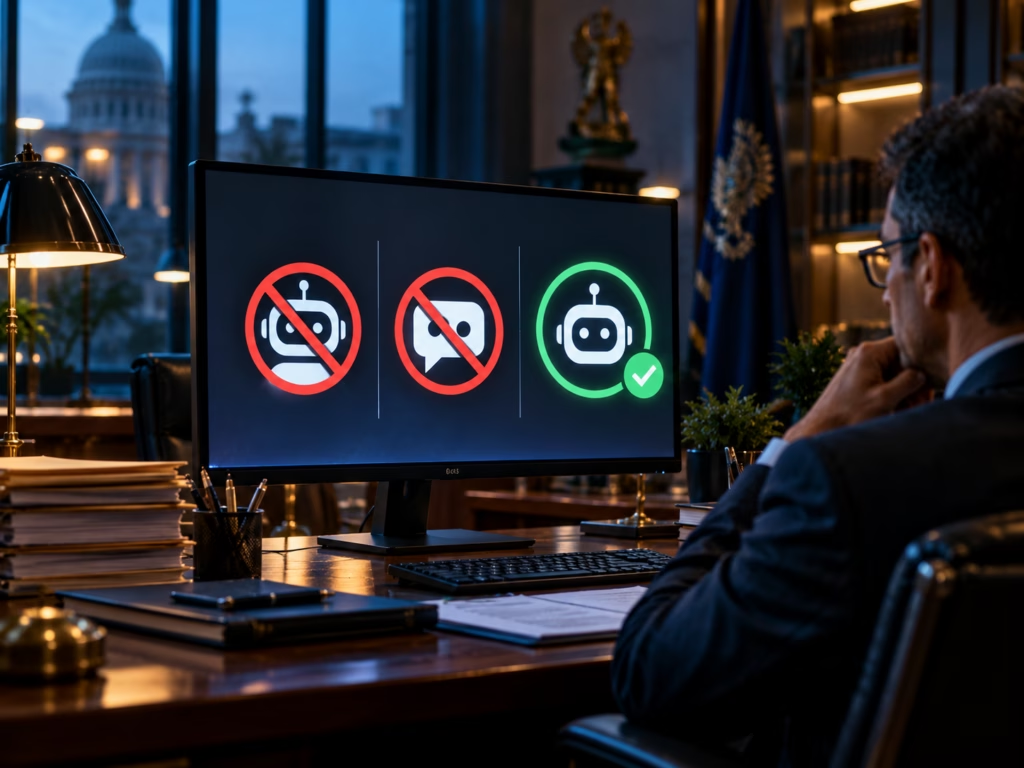
New York’s Education Department, under Mayor Zohran Mamdani, announced earlier this fall that the city would “fully discontinue or disable the AI components of more than 38 previously allowed programs” — specifically student-facing generative AI features, not necessarily whole products. This week, Chalkbeat’s reporting showed how messy the rollout has been.
Some specifics from that reporting:
- Amira, an AI reading tutor used in more than 200 city schools, was banned outright because officials said it can’t function without AI
- The Education Department’s own chatbot “teaching assistant”, built with Microsoft and used in six schools last year, lost student access
- Google’s Gemini was confirmed banned, though officials said it wasn’t on the list because it was already being deactivated for students
- Magma Math turned off AI-generated hints on September 4 and received approval to keep operating on October 5
- HMH said none of its flagged products use student-facing AI, and Wordly, a translation tool, said it doesn’t use generative AI at all and is working to get off the banned list
There’s a carve-out for tools that help English-language learners. But the sharpest criticism came from education-technology critic Leonie Haimson, who said: “You cannot trust the companies that they’re not using student-facing AI” — and that the department can’t be trusted to independently evaluate the products, either.
That tension is the real story. A ban is easy to announce and hard to verify. If vendors say they don’t use the banned technology and officials say they do, someone has to be able to check — and nobody yet has a standard way to do that.
What the Pattern Says
Put the three side by side, and a shift is visible.
- The question has changed. It used to be “is AI good or bad?” It’s now “who approved this, for which users, and who checks?”
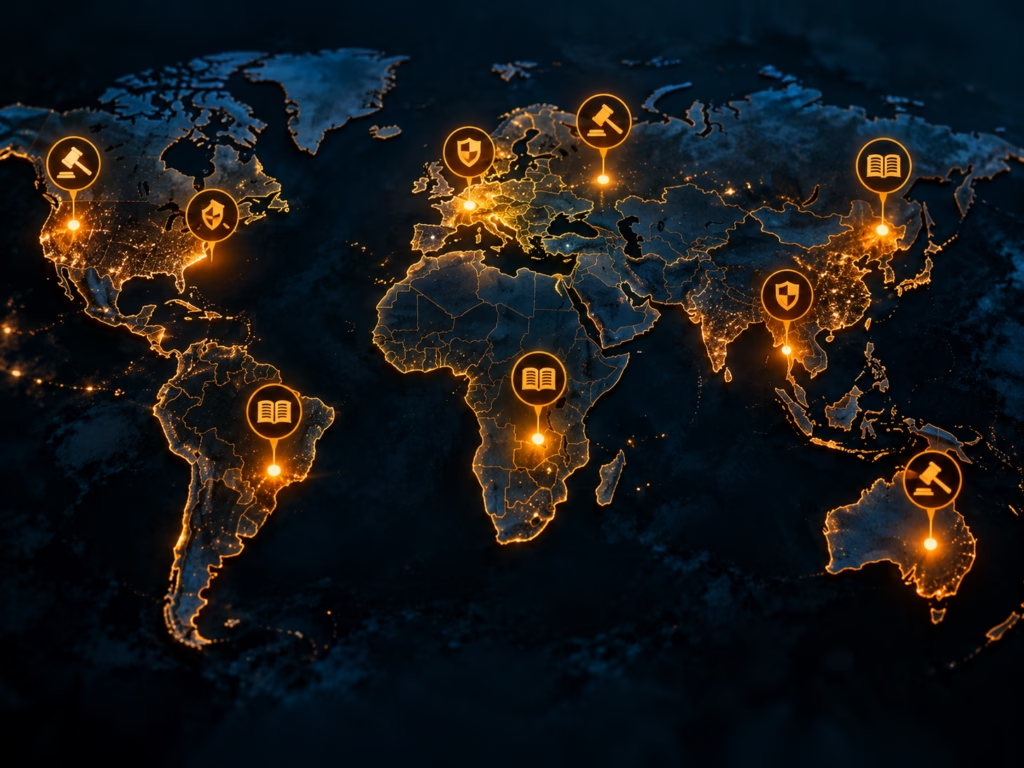
- Enforcement is local and fragmented. One state’s court, one country’s IT department, one city’s school system — each acting on its own, with no shared definition of what counts as safe
- Children and public institutions are the pressure points. That’s where voters, parents, and legal liability intersect, and it’s where restrictions land first
- Trust is becoming a product feature. Sweden didn’t ban AI; it chose one vendor it could review and trust. Companies that can document their security and safety practices clearly may win business that capability alone doesn’t
Even the AI companies see it coming. CNBC reported in August that Anthropic’s IPO filing was expected to list AI backlash as a risk factor — a notable thing for a company to put in writing before its shares trade. We cover the rest of that filing in our breakdown of Anthropic’s leaked IPO numbers. And the regulatory attention isn’t limited to chatbots: the SEC’s examinations division reportedly named advanced AI among the factors it will scrutinize across more than 34,000 registered firms, flagging risks like deepfake-enabled social engineering.
What It Means for You
- If you use AI at work, find out whether your employer has an approved-tools list. Sweden’s approach — approved tool in, everything else out — is likely to become standard in regulated environments
- If you’re a parent, expect more schools to publish which AI features students can access and which are switched off. Ask for the list
- If you build or sell AI products, documentation is now a competitive advantage. Security reviews, safety testing, and age-appropriate design will increasingly decide who gets in the door
- If you follow the industry, watch whether the Texas case survives early motions. A court willing to hear a request for pre-approval of model releases would change the conversation overnight
FAQ
Is ChatGPT banned in Texas? No. Texas filed a lawsuit asking a court to impose restrictions, including blocking minors and requiring third-party approval of new models. Nothing has been ordered, and the allegations are unproven.
Why is Sweden blocking Claude and ChatGPT but allowing Copilot? The reporting says the Government Offices approved Copilot after reviewing the service and increasing its security. No official reason for blocking the others appears in the coverage I found.
When does Sweden’s block start? Monday, October 26, 2026, based on the reporting dated October 23.
Is New York banning all AI in schools? No. The restrictions apply to student-facing generative AI features in more than 38 previously allowed products, with a carve-out for some English-language-learner tools. Some vendors dispute their inclusion.
Has OpenAI responded to the Texas lawsuit? OpenAI hadn’t responded to requests for comment in the coverage I reviewed.
Is this the start of an AI crackdown? It’s the start of more enforcement at the local level. A coordinated national or international crackdown hasn’t materialized — what’s happening is a patchwork, which is itself a challenge for companies trying to comply.
The Bottom Line
None of these three stories ends AI in the workplace, the classroom, or anywhere else. Texas’s lawsuit may stall; Sweden’s block still leaves its staff a sanctioned AI tool; New York’s list is already being renegotiated vendor by vendor. But together they mark a change in who’s setting the terms. The people who build AI are no longer the only ones deciding where it goes — prosecutors, procurement officers, and school boards are doing it too, with real consequences for the companies that depend on being let in.
The next phase of the AI story isn’t about which model is smartest. It’s about which one gets approved.
Sources
- KBTX: Texas attorney general sues ChatGPT maker OpenAI
- Daily Northern: Swedish Government Offices block ChatGPT and Claude
- Chalkbeat New York: NYC’s AI ban confusion — what’s allowed and what’s banned in city schools
- Yahoo Finance: SEC flags AI and “super intelligence” among market risks
- CNBC: Anthropic IPO filing will show AI backlash as a risk