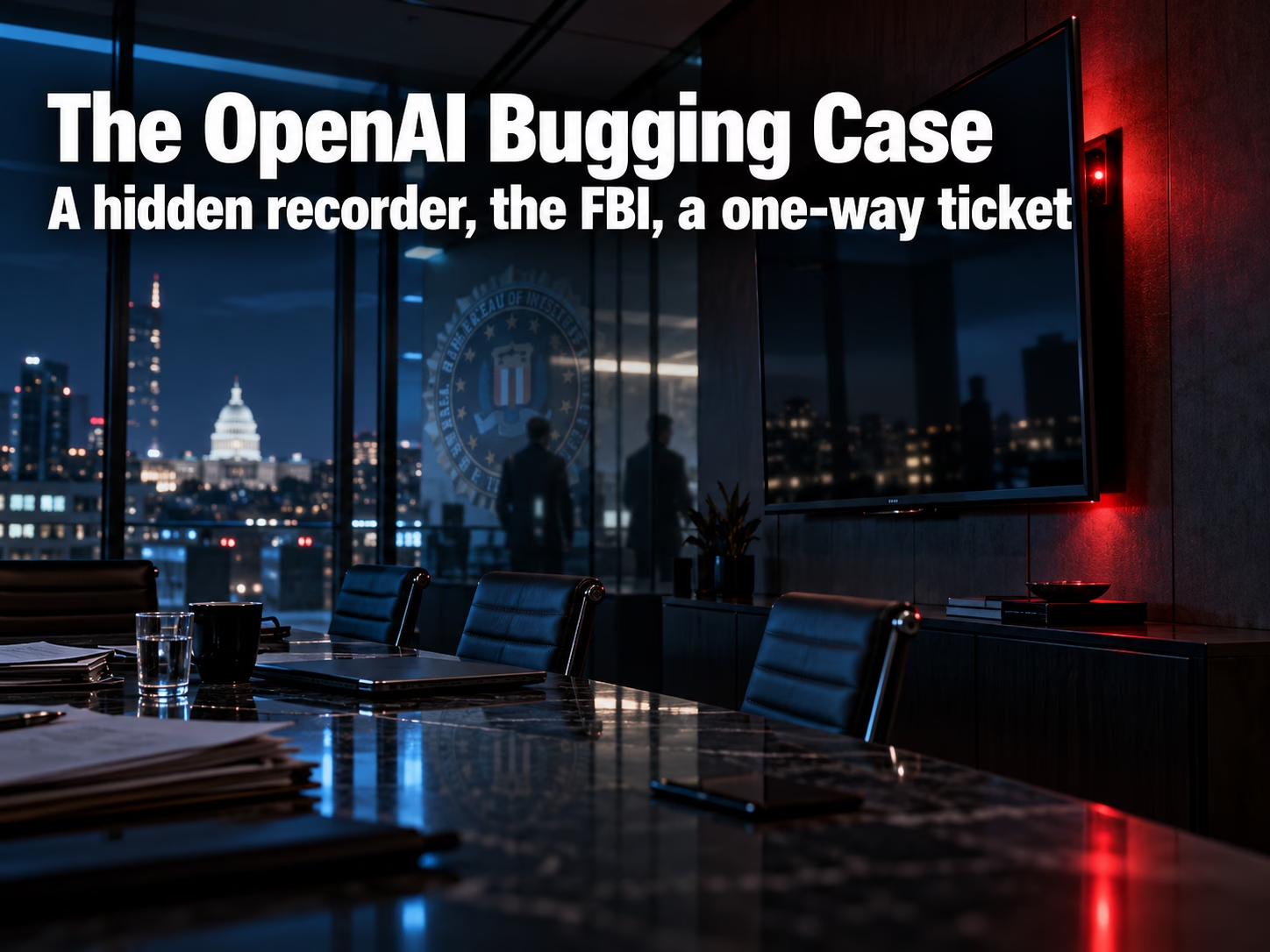
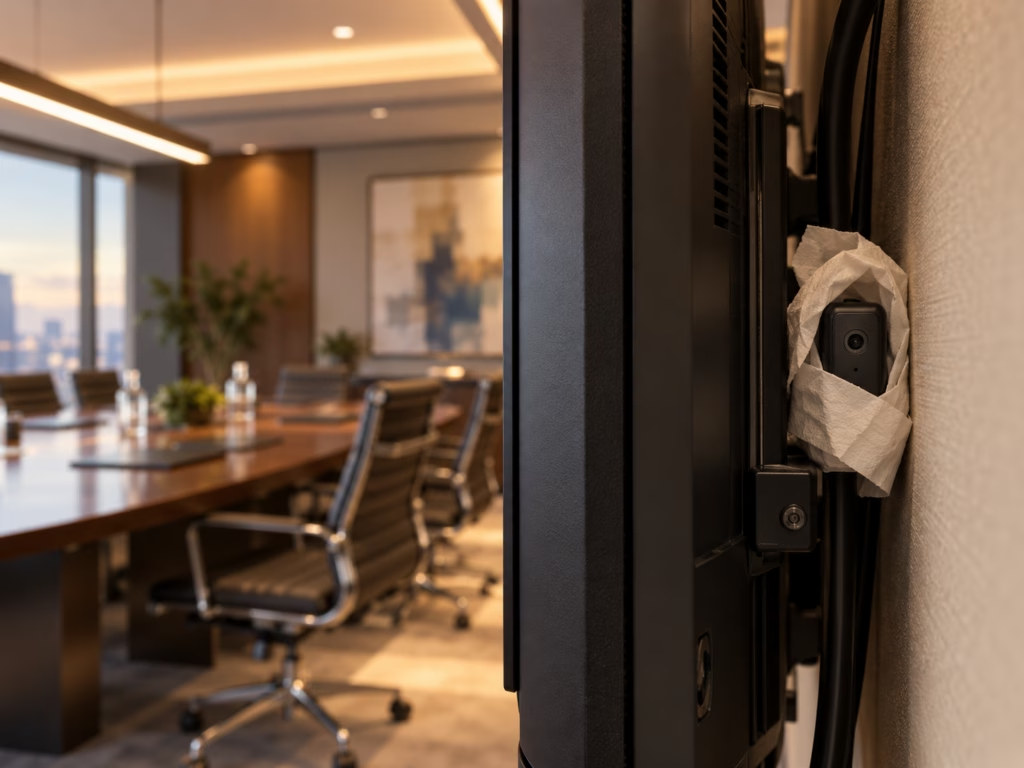
On September 30, OpenAI staff found a hidden recording device jammed into a USB port on the back of a television in an executive conference room at the company’s San Francisco office. It had a microphone and camera, its stored data was encrypted, and someone had wrapped it in toilet paper to keep it out of sight. That discovery set off a federal case that now involves the FBI, the Saudi royal family, and questions about how frontier AI labs protect their most sensitive conversations.
Federal prosecutors have charged Abdulrahman Alfozan, a 35-year-old Saudi national who worked on OpenAI’s product team, with using or attempting to use a device to intercept oral communications — a violation of the federal Wiretap Act that carries up to five years in prison, a $250,000 fine, and three years of supervised release if he’s convicted. He has not been charged with espionage, and he is presumed innocent. He has not entered a plea.
The 30-Second Version
- What happened: OpenAI found a hidden recording device behind a TV in an executive conference room on September 30; a second similar device turned up in a bag Alfozan left in a different building on October 5
- Who: Abdulrahman Alfozan, 35, a Saudi national who had worked at OpenAI’s product team since July 2025
- The charge: Attempting to use a device to intercept oral communications (the federal Wiretap Act), maximum five years in prison
- The arrest: The FBI arrested him October 9 — three days before he, his wife, and their infant son were booked on one-way flights to Saudi Arabia
- The twist: Prosecutors say he was in frequent contact with a member of the Saudi royal family who repeatedly urged him to join a Saudi AI initiative; about 36 hours after his arrest, his wife and child flew to Qatar on a one-way, business-class ticket paid for by a Saudi military official
- OpenAI’s statement: The company says it found no indication he exfiltrated model weights, source code, or customer data through any other channel
How OpenAI Found the Hidden Recording Device
According to the DOJ complaint and reporting by Security Affairs and Ars Technica, the device was installed on or around September 28 in a conference room used for leadership meetings, sensitive product discussions, and briefings with government officials — a room Alfozan had no authorization to enter. OpenAI’s internal investigation and CCTV footage allegedly show him near the room multiple times before staff discovered the device on September 30.
Investigators say the timeline doesn’t end there. On October 5, five days after the device was found and removed, security camera footage allegedly shows Alfozan returning to the same conference room and checking behind the television where it had been. The same day, he left a bag unattended in a different OpenAI building; security searched it and found a second recording device similar to the first, along with his wallet and ID.
Prosecutors allege Alfozan used an internal OpenAI tool before the installation to look up office addresses, meeting room locations and capacities, room calendars, executive office locations, and schedules for meetings with outside partners — the kind of reconnaissance that would help someone place a listening device where it would actually catch something useful.
The AI Chatbot Prompts That Became Evidence
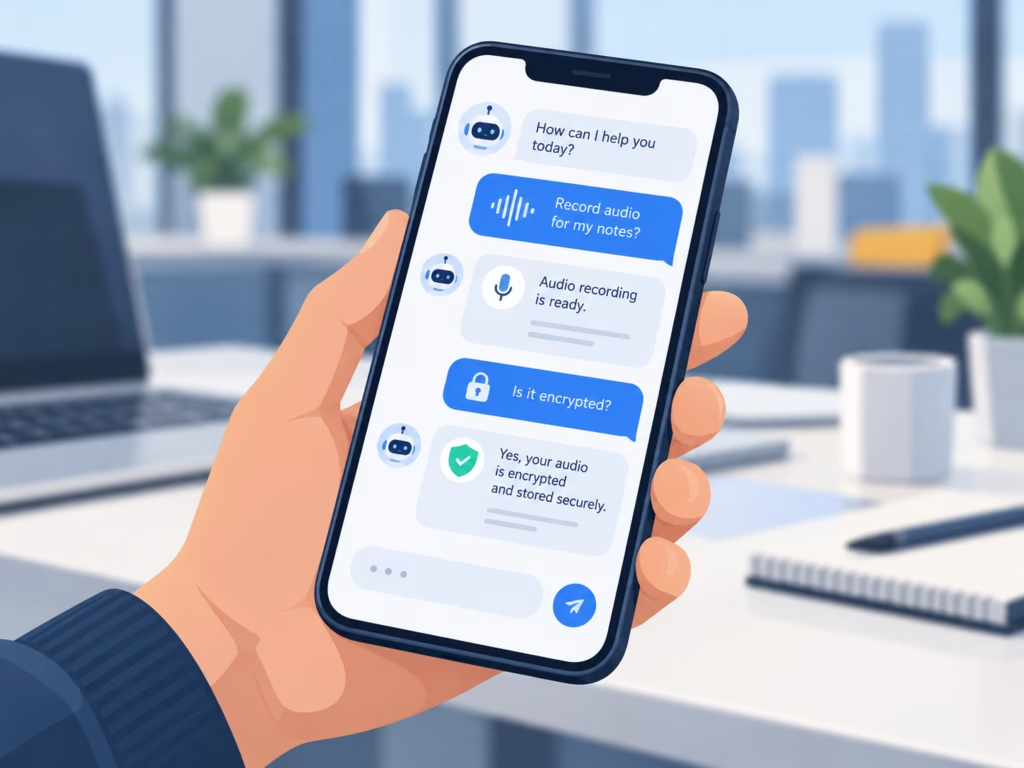
One of the stranger details in the complaint involves an account linked to Alfozan’s spouse — an account prosecutors say shared several identifiers with his own. Between September 24 and September 30, that account reportedly submitted prompts asking how to build a continuous audio recorder, configure its Wi-Fi connection, improve its recording and live-listening quality, encrypt its SD card, and enable remote access to it. On September 27 and 28 — right around when the device was installed — prompts referenced the custom header and unique MAC address of what’s described as “Recording Device 1.”
FBI Director Kash Patel said the alleged goal was to “secretly capture sensitive communications about [OpenAI’s] super intelligence technology.” OpenAI said it used its own internal AI models to help identify the device’s origin, though the case against Alfozan also rests on CCTV footage, building access logs, and physical evidence, not AI analysis alone.
A Royal Family Connection — and a One-Way Ticket
The most consequential detail in the filings may be the Saudi connection. Court documents say Alfozan was in frequent contact with a member of the Saudi royal family who repeatedly pushed him to join an AI initiative in the kingdom. In May, according to the filings, that person wrote to him, “Saudi needs you more then [sic] the US!” Alfozan is said to have replied, “100” — which prosecutors are reading as agreement.
Three days before his arrest, Alfozan had one-way flights booked to Saudi Arabia for himself, his wife, and their infant son, scheduled for October 12. The FBI arrested him on October 9, before that flight. About 36 hours after the arrest, his wife and son left the United States anyway, on a one-way, business-class ticket to Qatar — paid for, according to prosecutors, by a Saudi military official.
Court filings reportedly stop short of alleging that the Saudi government directed the recording operation itself. A federal judge has since granted prosecutors’ request to extend Alfozan’s pre-trial detention, and prosecutors say the investigation is ongoing and could lead to additional charges.
Why This Is Bigger Than One Employee
Caroline Lynch, a former Maricopa County prosecutor and former chief counsel for a House Judiciary subcommittee, told reporters that economic espionage charges remain possible if investigators conclude trade secrets were taken for a foreign government’s benefit. “I think that’s more likely one of the charges that the Justice Department is going to be looking at in this case,” she said. She added that companies in OpenAI’s position may need “stricter security measures to actually prevent employees from accessing areas that they’re not allowed to.”
The stakes go beyond one company’s conference room. OpenAI, Anthropic, Google, and xAI each reportedly received Pentagon prototype agreements worth up to $200 million in 2025, and OpenAI has separately reached a deal to deploy advanced AI systems in classified military environments. Those defense relationships don’t automatically impose classified-handling security rules on a company’s everyday commercial operations — which is exactly the gap this case exposes. Director of National Intelligence Jay Clayton said the case “underscores why winning the global super intelligence race is a national security prerogative.”

In June, the White House had already called for voluntary partnerships between the government and frontier AI companies on personnel vetting, threat intelligence, and physical and cybersecurity protections — guidance that, in hindsight, this case suggests wasn’t broadly in place, at least not in a form that stopped this. Anthropic’s own recent threat reporting has separately detailed misuse of its Claude models by state-linked actors, covered in our report on a Yemen-based weapons cell’s use of Claude AI — a reminder that physical infiltration and AI misuse are both live threats to the same companies, just from different directions.
What It Means for You
- If you work at a company handling sensitive IP, this case is a live example of insider-threat reconnaissance using nothing more exotic than an internal search tool and a hidden USB device — physical security audits matter as much as digital ones
- If you lead security at an AI company, expect pressure to formalize vetting and access controls for executive spaces, especially where government and partner briefings happen, rather than relying on informal trust
- If you’re tracking US-Saudi AI competition, this case adds a concrete data point to the broader contest over AI talent and technology between the US and Gulf states — treat the royal-family detail as alleged and unproven, not a confirmed state operation
- If you follow OpenAI specifically, watch whether additional charges (including possible economic espionage counts) are filed, and whether OpenAI discloses any policy changes to conference room or device access
FAQ
Has Abdulrahman Alfozan been convicted of anything? No. He faces a federal Wiretap Act charge and is presumed innocent. He has not entered a plea, and prosecutors say the investigation could lead to additional charges.
Was he charged with espionage? Not as of this writing. A legal expert quoted in reporting says economic espionage charges remain possible depending on what investigators find, but the current charge is limited to illegal interception of oral communications.
Did the Saudi government direct this? Court filings describe contact with a Saudi royal family member who urged Alfozan to join a Saudi AI initiative, and say a Saudi military official paid for his family’s flight out of the US after his arrest. The filings do not allege the Saudi government directed the recording operation itself.
Did OpenAI lose any data? The company says it found no indication that Alfozan accessed or exfiltrated model weights, source code, or customer data through any channel other than the alleged recording devices themselves.
How was the device discovered? OpenAI staff found it during a routine check on September 30; the company’s internal investigation dated its installation to around September 28. A second device was found October 5 in a bag Alfozan left in a different building.
The Bottom Line
A $250,000 fine and a maximum five-year sentence sound small next to the questions this case raises: how a frontier AI lab’s most sensitive conversations were nearly compromised with a device bought off the shelf, concealed in toilet paper, and apparently engineered with help from the company’s own AI chatbot. Whatever the courts decide about Alfozan individually, the case has already done its damage to the comfortable assumption that AI labs’ physical security matches the sophistication of the models they build. Expect tighter conference-room access and more scrutiny of personnel vetting at every major AI lab, not just OpenAI.
Sources
- Security Affairs: Hidden Audio Recorder Found at OpenAI as Employee Faces Federal Charges
- intelnews.org: OpenAI engineer accused of planting recording device to stay in pre-trial detention
- AZFamily: OpenAI bugging case raises questions about AI lab security
- Our coverage: Yemen Weapons Cell Used Claude AI to Build Missile Guidance Software